Ultimate Subject Zero Devotion: Jack's Arm Tattoo Reimagined as a Back Piece
There is casual love for a video game character, and then there is extreme love. We see plenty of dedication in the gaming community—whether it's building full-scale Master Chief armor or collecting replica lightsabers.
But when it comes to the Mass Effect universe, the fandom operates on an entirely different level. Case in point: this incredible tribute to Jack (also known as Subject Zero). One dedicated fan took the ultimate step, recreating Jack’s intricate arm sleeve and tattooing it directly onto their own back.
It’s pretty epic. A massive, permanent tribute to the Normandy's resident biotic powerhouse.
The Lore Behind the Ink
In the lore of Mass Effect 2 and 3, every single one of Jack's tattoos tells a story. From her time as a tortured Cerberus experiment at the Teltin Facility to her days running with pirates and cults, she wears her history of violence, survival, and rebellion on her skin.
However, from a game development perspective, Jack's ink holds a brilliant, meta-level easter egg. As pointed out in this classic BioWare forum thread, the tattoos spanning Jack’s arms are not just random geometric shapes or pirate insignias. They are actually composed of early, rejected concept art of Jack herself.
That’s incredibly sneaky, BioWare. Instead of throwing out the character designs that didn't make the final cut, the art team literally tattooed them onto the final character model.
If you look closely at the texture files, you can see the silhouettes of early Subject Zero designs.
Matt Rhodes and the Evolution of Jack
This legendary easter egg is backed up directly by the original concept artwork created by BioWare's lead concept artist, Matt Rhodes. Designing a character as complex, damaged, and fiercely independent as Jack required dozens of iterations. Some featured masks, varying degrees of armor, and vastly different hairstyles before the team settled on her iconic shaved-head, punk-rock aesthetic for ME2.
The Enduring Legacy of Normandy's Crew
Jack has definitively proven to be one of the most enduring, beautifully written characters from the original Mass Effect trilogy. Going from a hostile, isolated convict to a fiercely protective biotic instructor at Grissom Academy in Mass Effect 3 remains one of the best character arcs in modern gaming.
The Ultimate Mass Effect cosplay pictures collection, and why the galaxy still feels alive
Mass Effect cosplay works because the series was never just about armor, blue skin, or cool alien cheekbones. It was about a galaxy under pressure, ancient machines rising from dark space, impossible choices, and a crew of damaged, brilliant, loyal, sometimes unstable people trying to hold the line.
That is why these costumes land so well. They are not just dress-ups from a popular RPG. They are echoes of the Normandy, the Citadel, Omega, Illium, Cerberus labs, biotic chaos, and the long war against the Reapers. A good Mass Effect cosplay carries story with it, and this collection still has that pull.
Garrus quietly contemplating life, calibrations, and probably how to save the galaxy again.
One of the great strengths of the trilogy is that it makes its squadmates feel like more than support classes. Garrus is not just the cool turian marksman, he is a soldier shaped by C-Sec frustration, vigilante justice, and loyalty so deep it becomes one of the emotional anchors of the series. Liara begins as an awkward archaeologist obsessed with Prothean history and grows into one of the most powerful information brokers in the galaxy. Tali carries the burdens of pilgrimage, exile, fleet politics, and a people haunted by the geth. Miranda is Cerberus perfection with cracks running under the surface. Jack is raw trauma turned into biotic fury. Samara is duty made flesh.
And right in the middle of all of that stands Commander Shepard, one of gaming’s great player-defined heroes. Paragon or Renegade, Spacer or Colonist, Soldier or Adept, Shepard becomes the point where the whole galaxy meets. That is part of why Mass Effect cosplay has such range. It is not one look. It is an entire political, military, and species-spanning setting full of recognizable silhouettes and emotional baggage.
A lot of that energy peaks in Mass Effect 2, still one of the great squad-building games. The structure is simple and brilliant. Rebuild the Normandy. Recruit the right people. Earn their loyalty. Go through the Omega-4 Relay. Survive the suicide mission. That setup gave nearly every character more texture, and it is no surprise that fans still keep returning to this series through armor builds, body paint, alien prosthetics, N7 jackets, and meticulous recreations of favorite squadmates.
Why Mass Effect works so well in cosplay
The designs are instantly readable. N7 armor, turian face plates, asari head crests, quarian masks, Cerberus suits, biotic tattoos. Fans know what universe they are looking at almost immediately.
The characters have real narrative weight. These are not empty shells built for a poster. Nearly every major Mass Effect companion carries a personal history tied directly into the series’ central conflicts.
And the world itself is rich enough to support every style of costume build, from clean military armor to alien prosthetics to nightclub Omega chic. The galaxy of Mass Effect is broad, but it always feels coherent.
The lore behind the looks
Mass Effect is one of those science fiction settings where costume details actually mean something. Armor colors can point to military branches or personal allegiances. Scars matter because Lazarus Project resurrection matters. Blue skin does not just mean alien, it means asari, a species woven through galactic politics, biotic culture, and Prothean mystery. A visor and hood are not just a cool design, they evoke the quarian Migrant Fleet and a people forced to live in sealed suits because of immune fragility and exile.
The series also blends military science fiction with old-school space opera in a way that gives cosplay real flexibility. One character can look like a special forces operative, another like a mystic warrior, another like a crime syndicate queen, another like a walking biotech experiment. It all still belongs together because the Reaper threat, the Citadel races, Cerberus intrigue, and the Normandy crew tie the whole thing into one grand arc.
That is what separates Mass Effect from a lot of game franchises. The costumes are cool, yes, but they also come loaded with history, politics, trauma, romance, war, and the memory of impossible choices.
Samara, all poise and lethal calm. The uploaded page notes the model connection too, which only adds to the weirdly perfect circle here.
Female Shepard means business, as usual. No wasted movement, no wasted words, galaxy on fire.
Too cool for school Shepard on the right, with exactly the kind of squad energy this series thrives on.
Liara dressed for the ball, still carrying the full weight of Prothean obsession, Shadow Broker secrets, and galaxy-saving grief.
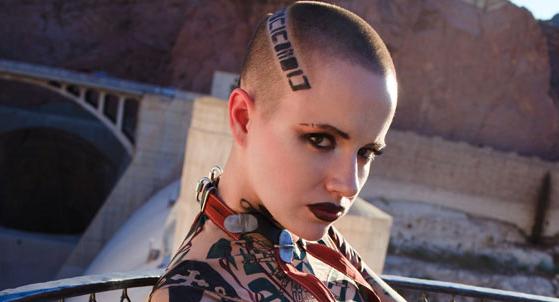
Jack was never meant to be tidy. She is biotic trauma given human form, and that is why a strong Jack cosplay has real bite.
A very sharp FemShep look, channeling the series’ mix of military precision and player-defined legend.
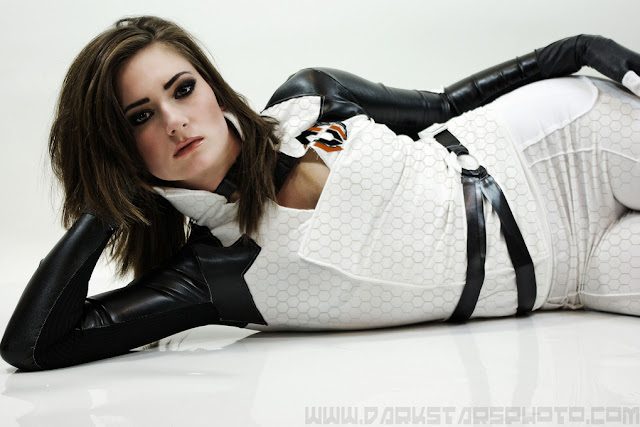
Miranda Lawson always sits in that perfect Mass Effect zone between engineered confidence and buried vulnerability.
From left to right, pure biotic trouble. Mass Effect has always understood the appeal of a dangerous squad.
Something wrong with your eye, Garrus? Probably not. He has seen worse on Omega.
Scarred-up Shepard. Which feels right, because nobody gets through the trilogy without carrying something visible or not.
Tali cosplay, and proof that one of Mass Effect’s most beloved characters barely needs a visible face to be iconic.
Another Samara build, and another reminder that Mass Effect’s asari designs mix elegance, age, and lethal force better than almost any space opera series.
Final thought
Mass Effect remains one of the best modern science fiction game worlds because it gives its characters both style and consequence. These people are not only cool to look at, they are carrying wars, betrayals, species histories, political grudges, impossible loyalties, and the shadow of extinction on their backs.
That is why this cosplay still works. Garrus is not just a bird-faced sniper. Liara is not just a blue alien scholar. Tali is not just a masked engineer. Miranda is not just Cerberus perfection. Jack is not just attitude. Shepard is not just armor. Every one of them means something in the larger shape of the trilogy.
So yes, this is a costume gallery. But it is also a reminder of why BioWare’s galaxy got under so many players’ skin in the first place. The Reapers were terrifying, the Normandy crew was unforgettable, and Mass Effect gave fans a universe worth wearing.
The Reapers are the great nightmare at the heart of Mass Effect: ancient synthetic-organic starships that return every 50,000 years to harvest advanced civilisation. They are not merely big enemy ships. They are the hidden architecture of galactic history, the reason the mass relay network exists, the trap behind the Citadel, and the force that turns progress itself into bait.
Every cycle, organic species rise. They discover mass effect technology. They expand through the relay network. They gather at the Citadel. They believe they are building their own future. Then the Reapers return from dark space and cut the head off galactic civilisation in one surgical strike.
That is what makes them more frightening than ordinary video game villains. The Reapers do not simply invade. They farm history.
The Human-Reaper from Mass Effect 2 turns the Reaper threat into body horror: civilisation processed into a machine god.
The Reapers Are Not Just Machines
The word “Reaper” is not their own name. Sovereign, the first Reaper Commander Shepard truly encounters, insists that the term was given to them by the Protheans. To Sovereign, names are almost beneath the point. The Reapers simply are.
The geth know them as the Old Machines, which is a cleaner description but no more comforting. Reapers are synthetic-organic starships, each one a colossal intelligence, a war machine, and a preserved civilisation folded into a single terrible form. Legion’s description in Mass Effect 2 says it best: “One ship, one will, many minds.”
That line is doing a lot of work. A Reaper is not just a ship with a brain. It is a machine built out of harvested life. It carries the biological and cultural residue of the species used to create it, then turns that memory into another instrument of the cycle.
Lore note: The Reapers are horrifying because they do not simply destroy civilisation. They convert it. The harvest is not only genocide. It is reproduction.
Dark Space and the 50,000-Year Cycle
Between cycles, the Reapers wait in dark space, the empty region beyond the galaxy’s outer rim. They hibernate there for tens of thousands of years, outside the normal reach of galactic exploration, until the time comes to return.
The genius of their system is that the galaxy itself has been shaped to make the harvest easier. The mass relays allow young civilisations to expand quickly, but they also guide those civilisations along predictable paths. The Citadel becomes the political and logistical centre of galactic life because the Reapers designed it to be irresistible.
When the Citadel relay is activated, the Reapers are meant to return directly into the heart of galactic government. They seize the Citadel, decapitate leadership, control the relay network, isolate star systems, and then proceed methodically through the galaxy. It is not a chaotic invasion. It is an engineered extinction protocol.
The cycle has repeated for millions of years. The Protheans were not the first to fall. They were merely the previous civilisation advanced enough to understand the trap, too late to escape it.
Where Did the Reapers Come From?
Early in the trilogy, the Reapers feel unknowable. Sovereign claims they have always existed and have no creators. That is part intimidation, part arrogance, and part cosmic horror theatre. The later Leviathan material gives the origin a sharper shape.
Before the current galactic order, the Leviathans dominated the galaxy and watched organic civilisations repeatedly create synthetic life that eventually turned against them. To solve this, they created an intelligence known as the Catalyst, designed to preserve life and resolve the conflict between organics and synthetics.
The Catalyst reached a monstrous conclusion: organic life should be preserved by harvesting advanced civilisations at their peak, converting them into Reapers, and resetting the galaxy before organics and synthetics destroyed each other. The first victims were the Leviathans themselves. Their image and substance became the foundation for the Reaper form.
That origin does not make the Reapers less terrifying. It makes them worse. They are not random monsters from the dark. They are a broken solution that became a religion, a machine logic that mistook preservation for annihilation.
Sovereign, Saren, and the First Mass Effect
In the first Mass Effect, Sovereign is initially treated as a massive dreadnought of unknown origin, apparently controlled by the rogue Spectre Saren Arterius. That is the trick. Sovereign is not Saren’s ship. Saren is Sovereign’s tool.
The reveal on Virmire is one of the great moments in the trilogy. Sovereign speaks to Shepard not like an enemy commander, but like a god tired of explaining itself to insects. Its language is vast, arrogant, and deliberately dehumanising. It does not threaten the galaxy in ordinary terms. It tells Shepard that extinction is inevitable because extinction has already happened countless times before.
Sovereign’s role is that of the vanguard. It was left behind to monitor the galaxy and trigger the Citadel relay when the next harvest was ready. The Protheans disrupted that plan, forcing Sovereign to work through agents such as Saren, the geth heretics, and the Citadel attack itself.
That is why the climax of Mass Effect works so well. Shepard is not simply stopping one rogue Spectre. Shepard is interrupting the Reapers’ preferred method of return.
The Prothean Counterattack
The Protheans were crushed by the Reapers, but not completely erased before they managed one decisive act of resistance. A group of elite Prothean scientists survived on Ilos and eventually discovered the connection between the Citadel, the keepers, and the Reaper signal.
The keepers were supposed to respond to the Reaper vanguard’s signal and open the Citadel relay, allowing the full Reaper fleet to arrive from dark space. The Prothean scientists used the Conduit, a prototype mass relay, to reach the Citadel and alter the signal. When Sovereign eventually called for the keepers to open the way, they did nothing.
That single act broke the normal cycle. It did not destroy the Reapers. It did not save the Protheans. But it gave the next cycle, Shepard’s cycle, a fighting chance.
Sovereign’s direct assault on the Citadel was the result of that failure. It needed Saren and the geth to manually activate what the keepers would no longer open. When Shepard stopped Saren and the combined Citadel forces destroyed Sovereign, the Reapers lost their cleanest path back into the galaxy.
The Reaper fleet waiting in dark space, the nightmare Mass Effect spends three games dragging into the light.
The Human-Reaper and the Collectors
Mass Effect 2 shifts the Reaper threat from cosmic dread into body horror. The Collectors begin abducting human colonies from the Terminus Systems, and the reason is worse than simple extermination. The abducted humans are being processed into raw genetic material to construct a new Reaper.
The Collectors themselves are another Reaper atrocity. They are not a separate mystery species in the ordinary sense. They are the genetically altered remnants of the Protheans, captured and repurposed after the last cycle. The Reapers did not merely defeat the Protheans. They turned some of them into tools.
Harbinger directs the Collectors and uses them to continue the Reaper plan after Sovereign’s destruction. The Human-Reaper larva at the Collector Base shows how the harvest functions as reproduction. Humanity, having defeated Sovereign, becomes intensely interesting to the Reapers as raw material.
When Shepard reaches the Collector Base, the incomplete Human-Reaper is already taking shape: skull, arms, ribcage, spine, machine framework, and processed human essence. EDI concludes that tens of thousands of humans have already been consumed in its construction.
That is what makes the Human-Reaper sequence so grotesque. It takes the abstract Reaper cycle and makes it physical. Colonies disappear. Bodies become paste. A civilisation is turned into a machine with a face.
With the Human-Reaper destroyed and the Collectors defeated, Harbinger and the rest of the Reaper fleet begin moving toward the Milky Way. Shepard has delayed the cycle, but not stopped it.
Character note: Legion’s “one ship, one will, many minds” line is one of the most chilling pieces of Reaper lore because it implies that harvested life does not simply vanish. It may continue inside the machine.
Indoctrination: The Reapers’ Quietest Weapon
The Reapers are terrifying as warships, but indoctrination is what makes them truly dangerous. Their technology emits signals that slowly erode organic thought, weakening independent judgement and bending victims toward Reaper goals.
Indoctrination can look subtle at first. Suggestion. Obsession. Rationalisation. Loyalty to an idea that is not really yours anymore. Over time, the victim loses autonomy and becomes another instrument of the Reaper will.
Saren is the clearest example in the first game. Sovereign does not simply puppet him from the beginning. It allows him enough free will to remain useful. Saren convinces himself that submission is a survival strategy, that organics might be spared if they prove their value. That is indoctrination at its most insidious: the victim still believes he is making arguments.
Matriarch Benezia shows another side of it. Even a powerful asari matriarch can only resist for so long. Her tragedy is that she understands what is happening to her and still cannot fully escape it.
The derelict Reaper in Mass Effect 2 makes the danger even clearer. A Reaper does not need to be fully operational to corrupt minds. Even dead or disabled Reaper technology can continue to damage organic thought. That means the Reapers do not only conquer with fleets. They contaminate reality around them.
Reaper Design: Cuttlefish, Starships, and Machine Gods
Sovereign’s design is one of Mass Effect’s smartest visual decisions. It looks like a ship, but not only a ship. The cuttlefish or squid-like silhouette gives it an organic wrongness. The long hull, jointed limbs, and weaponised tentacles make it feel like something that could crawl, swim, fly, and think all at once.
The Reaper form also separates them from normal science-fiction warships. A dreadnought can be intimidating. A Reaper feels like a predator pretending to be a vessel.
Harbinger and the wider fleet share that core language, though there are variations. Some appear more insect-like, some more cuttlefish-like, some with different limb structures and glowing eye patterns. That diversity fits the idea that each Reaper may preserve something of the species used in its creation, even if most of the capital ships still echo the Leviathan-derived form.
This visual design also explains why the heretic geth worship them. Reapers are everything the heretic geth admire: independent synthetic power, vast intelligence, and machine existence freed from organic limits. Their monuments to Sovereign’s form are not just decorations. They are religious architecture built by machines worshipping machines.
Reaper Weapons and Technology
Even without indoctrination, Reapers are almost impossibly dangerous warships. Sovereign’s weapons can tear through cruisers and dreadnoughts. Their main guns fire streams of molten metal at a fraction of light speed, shredding kinetic barriers and hull plating with brutal efficiency.
Reapers are also protected by advanced kinetic barriers, massive armour, and the simple advantage of scale. A single Reaper can devastate fleets. A Reaper invasion can overwhelm planets.
But they are not invincible. Sovereign is destroyed after its defences are compromised during the Battle of the Citadel. Reaper destroyers can be brought down with enough firepower, especially under the right battlefield conditions. The entire trilogy depends on the difference between “nearly unstoppable” and “actually impossible.”
That narrow gap is where Shepard lives.
The Reaper War and Earth
By Mass Effect 3, the waiting is over. The Reapers arrive in force and Earth becomes one of the first great symbols of the invasion. This is no longer a mystery handled through visions, warnings, and isolated encounters. The harvest has begun openly.
The invasion of Earth works because it turns galactic horror into something immediate. Skyscrapers burn. Fleets collapse. Civilians run. Reaper silhouettes dominate the skyline. The trilogy’s abstract extinction cycle becomes a city-level nightmare.
The Reapers do what they have always done: overwhelm command structures, isolate systems, turn populations into resources, and use indoctrinated agents to weaken resistance from within. The only difference is that this cycle has Shepard, the Crucible project, and a galaxy that has at least begun to understand what it is fighting.
Mass Effect 3 brings the Reaper threat home, turning Earth’s skyline into the front line of a galactic extinction event.
Why the Reapers Work as Villains
The Reapers work because they combine several kinds of fear at once. They are cosmic horror, because they are ancient and almost beyond comprehension. They are machine horror, because they reduce life to pattern, resource, and function. They are religious horror, because their language is full of inevitability, judgment, and godlike superiority. They are body horror, because the harvest turns living beings into material.
They also make the Mass Effect universe feel rigged. The relays, the Citadel, galactic politics, technological development, even the shape of progress itself, all of it has been influenced by the Reapers. Civilisation believes it is climbing upward, when in fact it is being guided into a slaughterhouse with better lighting.
That is why Sovereign’s conversation on Virmire still matters. It is not simply a villain monologue. It is the moment Mass Effect tells the player that the galaxy is older, darker, and more manipulated than anyone understood.
The Reapers are not frightening because they are impossible to kill. They are frightening because they built the road everyone else was walking on.
Miranda Lawson body paint cosplay, Mass Effect style, Cerberus cool, and why this character still stands out
Miranda Lawson was always designed to be memorable. In Mass Effect 2 and Mass Effect 3 she walks into scenes with the kind of controlled authority that makes other characters look half-finished. Cerberus officer. Genetic perfection project. Tactical operator. Coolest person in the room, at least according to Miranda.
That is why a Miranda cosplay page works best when it treats her as more than a visual punchline. Yes, the black-and-white Cerberus suit is iconic. Yes, fans and BioWare alike understood exactly how striking the design was. But the reason she lasts is that the character underneath the costume has real narrative weight.
Finally, someone has upped the ante with a polished take on Miranda Lawson from Mass Effect 2 and 3, using body paint and costuming to push her Cerberus look into something halfway between fan art, convention photography, and character study.
That matters because Miranda has always lived in that strange BioWare space between strong writing, deliberate visual branding, and a fanbase that never quite stopped arguing about how the games framed her. EA’s own 2009 casting announcement described her very plainly, a deadly Cerberus operative, genetically engineered for superior mental and physical traits. That one sentence tells you almost everything about why she became such a strong cosplay subject. :contentReference[oaicite:2]{index=2}
Why Miranda Lawson works so well as cosplay
Miranda’s design is unusually efficient. The palette is simple. Black, white, clean paneling, a sleek futuristic silhouette. The visual coding says Cerberus before you even start thinking about dialogue or plot. Then the character adds a second layer, sharp intelligence, emotional reserve, an earned sense of competence, and the slow reveal that underneath all that control is somebody who was engineered, shaped, and used by other people long before Shepard ever met her.
That gives Miranda cosplay more substance than it first appears to have. It is not only about looking polished. It is about performing confidence, and maybe a little vulnerability underneath it. Good Miranda cosplay usually understands that balance.
Miranda is one of those Mass Effect characters whose visual identity is locked in almost immediately, which makes her ideal for body paint and stylised costume photography.
Miranda, Cerberus, and the politics of looking perfect
Miranda’s role in the trilogy is part of what makes the character more interesting than her early marketing sometimes suggested. She is tied to Cerberus, which means she arrives carrying the full baggage of one of Mass Effect’s most morally compromised human organisations. She serves the Illusive Man. She helps oversee the Lazarus Project. She believes in human advancement, but she is never allowed the comfort of staying simple.
That conflict is what gives Miranda her edge. She is hyper-competent, but never entirely at peace with the machinery she belongs to. Her entire life was shaped by the idea of perfection, and yet some of the character’s best scenes are about her trying to prove that she is more than what she was designed to be.
That is why she remains such a strong fan favorite. Not because the suit is famous, though it is. Because Miranda is one of BioWare’s better examples of a character who begins as an image and gradually reveals herself as something more complicated.
Why this design remains cosplay-friendly
The black-and-white Cerberus suit is easy to recognise.
The costume lines translate well into body paint, latex, and fitted cosplay materials.
The character has enough lore behind her that the look feels like more than surface.
And Miranda herself has the kind of controlled, high-status attitude that cosplayers can really perform in front of a camera.
Photography, body paint, and the fan-art effect
These Miranda photos were taken by photographer Joey DeMarco, who clearly has an eye for body paint photography and for the way genre costuming can blur into illustration. That is a big part of why this page works. Body paint is not just a substitute for fabric. It creates a stylised look that sits somewhere between realism and concept art.
Miranda is perfect for that approach because her design was already heading in that direction. She always looked a little like a finished concept sketch dropped into a functioning sci-fi world. Clean lines. Perfect posture. Hair never really out of place. Cerberus chic, if that is not too cursed a phrase
For readers who came to Miranda through the games, there is another reason she sticks. She is not just visually memorable. She is one of the trilogy’s more complicated squadmates, torn between duty, self-invention, and a very personal family history. That kind of emotional texture helps explain why fans keep returning to her long after the original release cycle of Mass Effect 2 ended.
So yes, this is a body-paint cosplay post. But it is also a reminder that Mass Effect was unusually good at making its companions feel like full people inside highly polished visual shells. Miranda might be one of the clearest examples of that entire BioWare balancing act.
Check out Joey DeMarco’s site for more superhero and body-paint photography.
Final thought
Miranda Lawson remains a strong cosplay subject because she represents one of Mass Effect’s core strengths. BioWare knew how to build characters who looked iconic at a glance, but still had enough story behind the costume to matter.
That is why a well-done Miranda body-paint shoot still lands. Not only because the design is sleek, but because fans remember the woman inside the design, the Cerberus operative, the engineered perfection project, the guarded ally, and one of Mass Effect’s most enduringly debated characters.
BioWare's online development director Fernando Melo revealed to his audience during a talk at GDC Europe that more than five months after Mass Effect 3 was released, only 42 per cent of players have completed the game.
Unsurprisingly, Mass Effect 2's completion rate even got a boost this year as players readied save files to import into Mass Effect 3. That stat is currently at 56 percent.
I say even if you heard that ME3 ending sucked, you should still finish it to prove you're a real gamer...
During my Mass Effect 3 run through I noticed a sweet Star Wars reference and thought it might be a good idea for a post so here's what I've found and what other kinds of easter eggs and reverential nods people have found in the campaign of the three games in the series. The Original Game
The Krogan Wrex say's "It's a trap" after being ambushed by Geth.
Upon seeing the Sovereign, the line "Look at the size...", is dropped, a probable reference to the New Hope when Luke sees the Death Star for the first time.
Mass Effect 2
Miranda's loyalty takes leads you to docking bay 94, which is the same number for the docking bay the Millennium Falcon was found in A New Hope.
Mass Effect 3
When Sheppard helps the Cerberus scientists escape the line "The first transport is away.." is uttered and is a reference to the Rebels escaping the planet Hoth. In fact the whole scene is a homage.
A lot of the characters that can be found in the Docks on the Citidel have the costumes and colours that appear to be inspired by the Star Wars universe - such as the orange jump suit Luke Skywalker wears in Empire Strikes Back.
If you look at the Rachi ravagers (the ones with sacs) side on, they kind of look like those Droideka robots that 'roll' around in The Phantom Menace, kinda:
Aria T'Loak is possibly the most beautiful blue character ever created. That's right, Smurfette has been taken down a peg by Aria in the blue hotty stakes as major player on the asteroid of Omega.
As Mass Effect's resident bitch, (aside from the female version of Commander Sheppard) Aria took a no holds barred approach to her business affairs and duly was deemed by this cosplay fan of re-inventing her look for the camera.
Will Aria T'Loak be in Mass Effect 3? It could be a possibility as the character had a larger than life presence in game and with A-list actor Carrie-Anne Moss on vocal duty, it would seem to be a waste if Aria was not in ME3. Either way, we're looking forward to the cosplay that game should generate!
The Infamous Body-Painted Mass Effect Promotional Girls
The title of this post does most of the work. These body-painted Mass Effect promo models were part costume, part marketing stunt, part old-school convention spectacle, and very much a relic of a different pop-culture moment.
Save for some impressively applied body paint, the women here were presented as a kind of live-action promotional extension of the Mass Effect universe. It was bold, cheeky, slightly ridiculous, and very much tuned to the booth-babe era of game marketing, when subtlety was not exactly the leading design principle.
A smiling promotional model styled with Mass Effect-inspired body paint, one of the more memorable pieces of old convention marketing excess.
What were the promoters thinking?
Probably that sex sells, and that a sci-fi franchise with sleek armour design, strong silhouettes, and instant recognisability could be turned into a human billboard with enough paint and confidence. In pure attention-grabbing terms, it worked. These pictures are ridiculous, memorable, and absolutely not the kind of thing anyone would pretend was subtle.
They also belong to a convention culture that has changed a lot. In the current era, booth babes and deliberately provocative promotional models are far less common at Comic-Con-style events. Codes of conduct are tighter, expectations have shifted, and marketing teams are less likely to lean this hard on shock value dressed up as fandom.
Another example of Mass Effect-themed promotional body paint, less cosplay craftsmanship than full-throttle event marketing.
A very old-school kind of game promotion
That is part of what makes these images interesting now. They are not just eye-catching photos from a convention floor. They are snapshots of an older games-marketing mindset, one where spectacle mattered more than restraint and brand identity could be shoved into almost any visual form so long as it made people stop walking.
Mass Effect, with its recognisable armour lines and sci-fi military aesthetic, gave promoters a visual language to work with. Instead of building a full costume, they reduced the idea of armour down to painted suggestion, then let the body itself do the rest of the selling. Effective? Probably. Subtle? Not even remotely.
Do not like your sexy space commanders in dark colours? Fine, there was pink too. The details changed, but the underlying gimmick stayed the same, translate the look of futuristic armour into paint, then push the whole thing right to the edge of what a convention floor could get away with.
That is why these images feel less like conventional cosplay and more like a carefully engineered promo campaign borrowing cosplay aesthetics. Real fan cosplay tends to celebrate character accuracy, craft, and fandom performance. These pictures are selling spectacle first, game branding second, and costume design somewhere after that.
In all seriousness, this kind of promotional activity is part of why conventions and fan events eventually tightened standards around costumes, behaviour, and floor presentation. Sex appeal has always been part of entertainment marketing, but when promotion starts overwhelming the event itself, organisers eventually step in. That is exactly what happened across a lot of comic, anime, and gaming conventions.
So this post works as both a bit of cheeky Mass Effect nonsense and a record of a time when publishers and promoters still thought this was a normal, sensible way to get attention. It certainly got attention. Whether it made the culture around fandom any better is a separate question.
Another convention-floor image from the same promotional style, colourful, eye-catching, and very much of its time.
Check out some more cosplay from the Mass Effect universe. That side of the fandom is usually more inventive anyway, because it is driven by character love and costume craft rather than pure promotional shock tactics.
Sex sells, everybody knows that. But as far as comic and gaming conventions go, organisers eventually had to crack down on what people wore and how brands promoted themselves, because efforts like this pushed the whole thing right to the edge. These images are funny, absurd, and very much a sign of the times, but they also help explain why those rules changed.
Commander Shepard inspired Mass Effect cosplay, using body paint and N7 styling to nod toward one of gaming’s most famous sci-fi commanders.
Mass Effect Cosplay: Shepard, Jack, Miranda and Samara
Costume play is all the rage, and Mass Effect was always going to become cosplay fuel. BioWare built a universe full of sharp silhouettes, alien species, military armour, stylish companion designs, and characters who look like they walked out of a space opera with a sidearm, a tragic backstory, and three unresolved loyalty missions.
Where there is a memorable heroine, a strange alien, a battle suit, or simply a character as instantly readable as Cortana or Supergirl, fans will find a way to dress up. No comic convention or Halloween party is safe from cosplay, and frankly, Gears of Halo is not complaining.
Mass Effect cosplay works because the characters are strong before the costume even starts. Shepard is command. Jack is trauma and rage weaponised into biotic power. Miranda Lawson is engineered perfection fighting against the people who designed her. Samara is discipline, age, code, and terrifying calm. These are not just costumes. They are personalities with armour, scars, tattoos, uniforms, and attitude.
Cosplay note: Mass Effect characters work best when the costume captures class, faction, and personality. N7 armour says command. Jack’s tattoos say history. Miranda’s suit says Cerberus precision. Samara’s design says ancient power under strict control.
Jack: Biotics, Tattoos and Trouble
Let’s start with Jack, also known as Subject Zero. In Mass Effect 2, Jack is one of the Normandy’s most volatile recruits: a biotic powerhouse shaped by abuse, experimentation, imprisonment, and survival. The old post called her the resident nutjob, but that sells the character short. Jack is angry for very good reasons.
That is why Jack cosplay is more demanding than it first appears. The costume is not only about shaved-head attitude, tattoos, straps, and biotic menace. The tattoos matter because they tell her history. The posture matters because Jack has spent her life refusing to look weak. A strong Jack costume has to carry both danger and damage.
Jack cosplay from Mass Effect 2. The tattoos, stance, and hard-edged styling do most of the storytelling.
So like I finally completed Mass Effect 2 and it's quite the game eh? But you already knew that didn't you? I tend to be very picky with my Xbox game purchases and will often only purchase a game well after the hype has died and the reviews and reflections of seasoned gamers are to be found. That was how I found the original Mass Effect and when the price was right, I snapped it up.
After that Magnificent game, I don't know why I delayed getting ME2 for so long. It's a triumph of story telling, it's your own pick-a-path in space - knowing the choices I make for our hero Commander Sheppard have repercussions in game and in ME3 can make for a tortuous exercise at times!
Knowing that I have a renegade Sheppard game saved for another run through meant I could generally keep a firm line - I usually chose a paragon action over the renegade but once in a while it was literally fun to stab someone in the back.
The characters to be found in ME2 are almost larger than life. When you get passed the dullsville that is Jacob, the Krogan known as Grunt, and to a certain extent, Miranda, the Mass Effect universe is full of interesting characters. I really enjoyed chatting with Mordin Solus about the ethics of the genophage and Samara's views on vigilante justice. I was disappointed when I managed to let her die during the suicide mission - I won't let that happen on my second run though!
I found the combat to be improved this time round, I don't know if was all my training with the sniper rifle in Halo: Reach or that they made it easier but this was my goto weapon for most encounters. I liked how ME2 made the whole weapons arrangement systems 'automatic' and you didn't have to mess around buying so much crap.
Despite lots of complaints from people, I didn't mind the mining operation part of the game to fund weapon upgrades and the like. Sometimes a bit of toil can bring rewards and I figure doing all of that helped build to a successful suicide mission outcome (maybe further run throughs with different choices may render that idea redundant?).
The original game was perhaps infamous as it allowed your character to pursue sexual conquests with your team mate. Clearly the ME2 designers had still not been told of the expression, never screw the crew, because I managed to get it on with Miranda. Here's my reward:
It was amusing to meet ME's original love, Ashely on a mission wherein she immediately got all mad at Sheppard for dying on her, not calling or whatever and basically threw a sulking tantrum only to apologise by an email later on. Does sleeping with Miranda after 'chat' that mean Sheppard cheated on Ashley? What repercussions if any will this have for Mass Effect 3? Either way, I stayed away from that Jack girl. She got crazy coming out her ears!
I did appeciate how the choices made in ME1 had some influence on this new story. While I may have shot a certain grumpy Krogan because he bored me and let the Arachni Queen live simply because I like spiders, I was pleased to see these actions had relevance in ME2 - and also, seeing how the alien races in universe of ME are slowly banding together as a result of in game actions is a great example of game play and story telling.
Overall I immensely enjoyed my first run through of Mass Effect, it as a mulitude of stories to tell, many aliens to shoot and the graphics and cut scenes were top notch. Bring on Sheppard saving Earth in ME3!





 and it's quite the game eh? But you already knew that didn't you? I tend to be very picky with my Xbox game purchases and will often only purchase a game well after the hype has died and the reviews and reflections of seasoned gamers are to be found. That was
 from Amazon


