Halo 5: Guardians Concept Art, Red Flags, Mystery Figures, and the First Hints of a Stranger Campaign
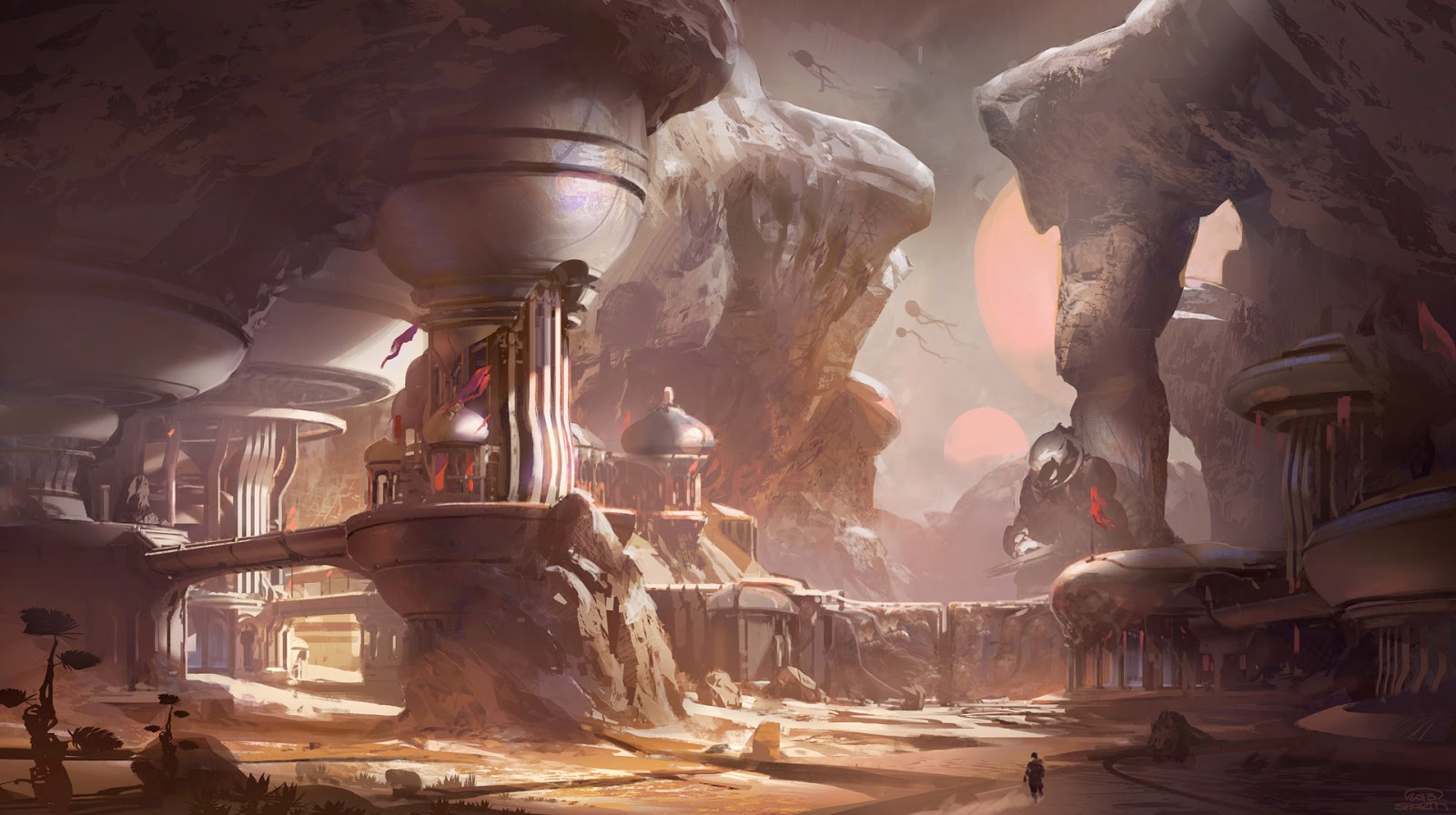
I missed this the first time I read Frank O’Connor’s comments on the Halo 5: Guardians announcement. On a second read, the interesting bit was not only what he said about the game. It was what he quietly slipped into the post: a new piece of Halo 5 concept art.
At the time, that was enough to send Halo fans into full forensic mode. This was before we had the finished campaign, before the full Master Chief versus Spartan Locke marketing push, before the Guardians themselves became the title’s looming Forerunner mystery. A single image could still carry the weight of a dozen theories.
And this one had plenty to chew on.
The Red Flags Are the First Weird Detail
The red flags stand out immediately. Halo concept art is often full of Forerunner geometry, UNSC hard surfaces, Covenant curves, alien skies, and ancient machine architecture. Flags are different. They suggest occupation, settlement, ritual, faction identity, or at least some kind of lived-in territorial claim.
That is why the image was so intriguing. There are not too many red flags waving around on pristine Forerunner structures. Flags feel human, ceremonial, political, or religious. They imply that somebody has arrived, claimed space, and decided the landscape needs a symbol planted in it.
That mattered because early Halo 5 speculation was already circling around the question of where the series could go after Halo 4. Requiem had opened the Forerunner door again. Cortana’s fate had emotionally wrecked the Chief. The Didact had pushed the story into ancient-war territory. Halo 5 needed to show whether the next step was going to be clean military sci-fi, deeper Forerunner myth, or something stranger.
Lore note: The flags are interesting because they make the space feel occupied rather than merely ancient. Halo’s Forerunner environments usually feel buried, sealed, or awakened. This image feels like someone has moved in.
The Giant Figure Behind the Flag
Then there is the giant figure behind the red flag. The old post called him “the giant dude,” which is honestly fair. That is exactly the kind of thing a Halo fan notices first. Big shape. Upright posture. Too large to ignore. Probably important. Possibly hostile. Definitely worth staring at until your eyes invent a theory.
With hindsight, it is tempting to read every early Halo 5 image through the finished game’s major pieces: Guardians, Prometheans, Fireteam Osiris, Blue Team, Sanghelios, Meridian, Genesis, and Cortana’s new role in the Created conflict. But concept art is often more suggestive than literal. It may express tone, possibility, geography, or world-building before the finished story locks everything into place.
That is why this image still works. It does not give the game away. It gives you texture. It says Halo 5 is not just going to be clean corridors and familiar UNSC decks. There are outposts here. Dust. Flags. Watchers. Flying shapes. A world that looks like it has already been altered by someone else’s arrival.
Flying Squiggly Things, Because Halo Loves a Weird Sky
The flying shapes in the background are another tiny detail that helps sell the image. Halo skies have always mattered. The ring overhead in Combat Evolved. The Covenant carriers over New Mombasa. The glassed skies of Reach. The enormous Forerunner structures in Halo 4. Halo likes to remind you that the sky is never empty.
Here, those flying squiggly things make the scene feel alive without making it familiar. Are they wildlife? Machines? Drones? Atmospheric decoration? Something tied to the local environment? The image does not explain, and that was part of the fun.
The best Halo concept art often works this way. It gives you just enough recognisable military sci-fi to feel grounded, then adds something slightly wrong in the distance. The viewer starts building lore before the game even arrives.
The Earlier Halo 5 Art by Sparth
Keen fans may recall the first piece of Halo 5 art to be released. That earlier image, associated with Sparth’s striking design sensibility, leaned into scale, mystery, and the sense that Master Chief was moving through a much larger unknown.
This later image feels less lonely but more politically charged. The red flags change the language. They make the environment feel claimed. The giant figure changes the scale. The flying shapes make the space feel unsettled. Together, the image points toward a Halo world where ancient mystery and active occupation are starting to overlap.
Design note: Sparth’s Halo work often understood the power of scale. The player should feel small, but not lost. That is very Halo: one soldier, one horizon, one impossible structure, and the sense that history is staring back.


